Build exam-specific pattern recognition
Train on realistic nurse-exam phrasing so triage, prioritization, pharmacology, safety, and delegation prompts stop feeling unfamiliar on exam day.
Nursing Exam Study Guide
Explore licensure, specialty and advanced-practice topics with 60 key concepts per guide. Learn the reasoning, check your recall and revisit areas that need more work.
Explore explained concepts, practical cues, common pitfalls and recall checks. Each guide identifies its credential or learning pathway and links to the sources used in its review.
159 guides available · Page 1 of 14
Current exam
CCRN Pediatric Study Guide: 60 Critical-Care Nursing Concepts
60 concepts · Learn & recall
Unverified label
Emergency Nursing Study Guide: ACEN Scope and 60 Key Concepts
60 concepts · Learn & recall
Current exam
ACHPN: 60 Key Concepts
60 concepts · Learn & recall
Current exam
ACNPC-AG Study Guide: 60 Adult-Gerontology Acute Care Concepts
60 concepts · Learn & recall
Renewal only
AFN-BC Renewal Study Guide: 60 Forensic Nursing Concepts
60 concepts · Learn & recall
Renewal only
AOCNS Renewal Study Guide: 60 Adult Oncology CNS Concepts
60 concepts · Learn & recall
Renewal only
AOCN Renewal Study Guide: 60 Advanced Oncology Concepts
60 concepts · Learn & recall
Current exam
AWCC Study Guide: 60 Advanced Wound Care Concepts
60 concepts · Learn & recall
Current exam
AGACNP-BC Study Guide: 60 Adult-Gerontology Acute Care Concepts
60 concepts · Learn & recall
Current exam
AGCNS-BC Study Guide: 60 Adult-Gerontology CNS Concepts
60 concepts · Learn & recall
Current exam
AMB-BC: 60 Key Concepts
60 concepts · Learn & recall
Current exam
NE-BC Study Guide: 60 Nursing Management Concepts
60 concepts · Learn & recall
Train on realistic nurse-exam phrasing so triage, prioritization, pharmacology, safety, and delegation prompts stop feeling unfamiliar on exam day.
Use question review, flashcards, and topic maps together so each wrong answer creates a tighter revision loop instead of more random reading.
Use short recall checks throughout the week, explain the reasoning behind each answer, and revisit concepts you have marked for another look.
See it. Understand it. Recall it.
Explore a structure, connect it to its function, then check your recall. Use these short modules alongside your exam-specific guides.
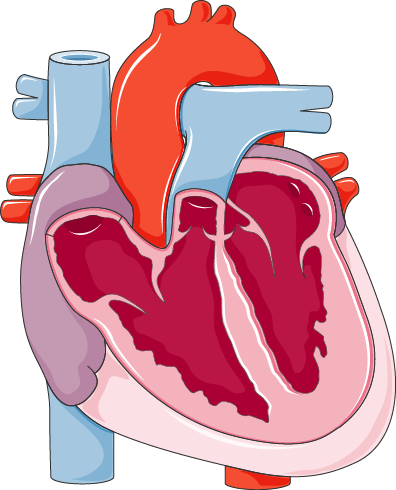
Cardiovascular
Connect the four chambers to pulmonary and systemic circulation.
Explore & learn
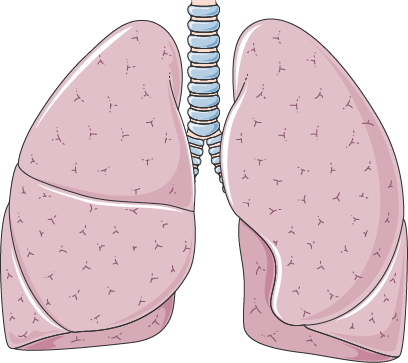
Respiratory
Locate the lobes and connect the conducting airways to gas exchange.
Explore & learn
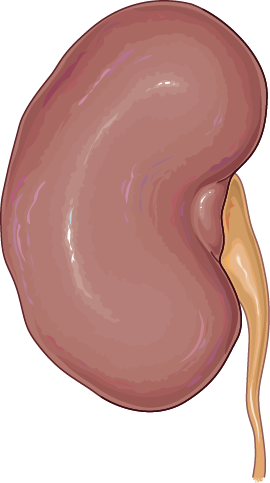
Renal
Explore the cortex and medulla, then connect filtration to urine formation.
Explore & learn
Illustrations by Servier Medical Art, CC BY 4.0. Unmodified.
Day 1: run a timed mixed quiz to expose current weak domains.
Day 2: review explanations and rewrite only the mistakes that came from reasoning gaps.
Day 3: drill dosage calculations, safety checks, and prioritization frameworks until they feel automatic.
Day 4: revisit the weakest systems-based or specialty topic with targeted question sets.
Day 5: use flashcards or spaced repetition on facts you keep missing.
Day 6: simulate a longer mixed block and track accuracy by topic.
Day 7: light review only, focusing on wrong-question notes and high-yield summaries.
The platform is structured around licensure, specialty, and advanced-practice nursing pathways, so you can train on the exam family that matches your role instead of piecing resources together manually.
Licensure & Registration
Critical Care & Emergency
Women, Neonatal & Pediatric
Advanced Practice & Leadership
Oncology, Infusion & Transplant
Perioperative, Surgical & Procedural
Community & Specialty Practice
Behavioral, Palliative & Supportive Care
General Nursing
The most reliable study plan is one that updates itself every week. Start with free questions, identify weak areas, and only then decide whether you need full access to notes, flashcards, and locked question banks.